
Overview
The C1 practical driving test has a first-time pass rate of approximately 50–60% for most candidates. Understanding the most common reasons for failure — and how to avoid them — is one of the most effective ways to improve your chances of passing first time. This guide covers the top faults recorded by DVSA examiners and the practical steps you can take to address each one.
Top Reasons for Failing the C1 Test
| Fault | Typical Severity | How to Avoid |
|---|---|---|
| Poor mirror use | Serious | Develop a systematic mirror check routine: centre, right, left before every manoeuvre and signal |
| Incorrect road positioning | Serious | Develop reference points for the width of the vehicle; practise on a variety of road types |
| Poor speed planning | Serious/Minor | Drive at an appropriate speed for the conditions; anticipate hazards well in advance |
| Hesitation at junctions | Minor/Serious | Trust your training; accept appropriate gaps; avoid unnecessary stops |
| Insufficient clearance from parked vehicles | Serious/Dangerous | Give more clearance than you think you need; a larger vehicle needs more space |
| Reversing exercise errors | Serious | Practise until the manoeuvre is consistent; move slowly and observe all round |
| Roundabout errors | Serious | Approach slowly; give way correctly; choose your lane early |
| Steering errors | Minor | Use the pull-push steering technique consistently |
| Poor junction observation | Serious/Dangerous | Take time at junctions; look both ways; process what you see before moving |
| Vehicle safety questions | Minor (×2) | Learn and practise all show me / tell me questions for the test vehicle |
Mirror Use
Poor mirror use is consistently the most common cause of serious faults in C1 tests. Candidates who have driven cars for many years often develop a habit of checking mirrors less frequently than is required for a larger vehicle. In a C1 vehicle, you must check your mirrors before every manoeuvre, every signal, and every change of speed or direction. Your instructor will help you develop a systematic routine.
The Reversing Exercise
The reversing exercise is a significant source of faults for many candidates. Unlike a car, a C1 vehicle has a much longer wheelbase and larger blind spots. The key to passing the reversing exercise is to move very slowly, use all mirrors systematically, and stop immediately if you are unsure of your position. Practise the reversing exercise repeatedly during training until it is consistent.
Nerves
Nerves are a factor in many test failures. Candidates who are well prepared and have completed a mock test with their instructor in conditions that replicate the real test are significantly less likely to be affected by nerves. Ask your instructor to conduct a full mock test before your real test day.
Vehicle Safety Questions
The test begins with vehicle safety questions (show me / tell me). Each incorrect answer counts as a minor fault. Two minor faults from vehicle safety questions is the maximum before they become a serious fault. Learn the answers to all show me / tell me questions for the specific vehicle you will be tested in — the questions and answers vary between vehicle types.
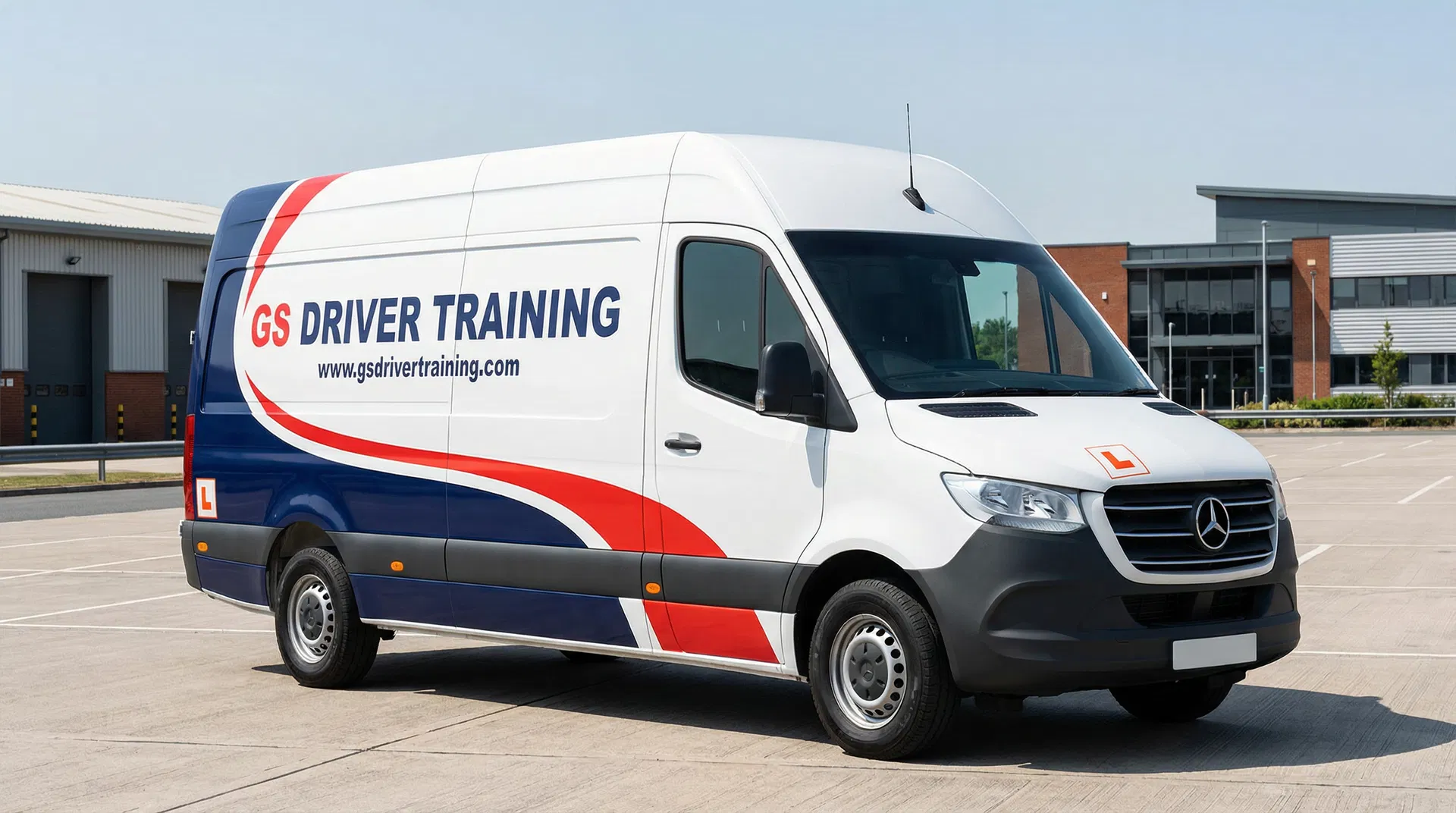
Book C1 Ambulance Training at GS Driver Training
GS Driver Training prepares candidates for the C1 test from our Dunsfold Aerodrome training centre, covering Surrey, Hampshire, Berkshire, and the South East. Call 01252 447808 or email [email protected].