
Overview
Getting a C1 licence for ambulance driving is a structured five-step process. You must be at least 18 years old, hold a full car (Category B) licence, and be medically fit to drive Group 2 vehicles. The process typically takes six to twelve weeks from start to finish. This guide walks you through every step in detail.
Step 1: Complete a D4 Medical Examination
The D4 medical is a Group 2 medical examination carried out by a GP or approved medical practitioner. It assesses your fitness to drive vehicles over 3,500 kg. The key areas assessed are:
- Eyesight — you must be able to read a number plate at 20 metres and meet the visual acuity standard of at least 6/7.5 in the better eye and 6/60 in the worse eye
- Cardiovascular health — blood pressure and heart history
- Neurological conditions — epilepsy, stroke, blackouts
- Diabetes — insulin-treated diabetes requires DVLA notification
- Sleep disorders — obstructive sleep apnoea is a common reason for delays
Book your D4 medical as early as possible. Processing by the DVLA can take two to four weeks, and you cannot apply for provisional C1 entitlement until the medical is complete. Costs typically range from £80 to £150.
Step 2: Apply for Provisional C1 Entitlement
Complete DVLA form D2 (Application for a Driving Licence) and submit it to the DVLA along with your current driving licence and the completed D4 medical form. The DVLA will add provisional C1 entitlement to your licence. You cannot sit the C1 theory test or begin practical training until this entitlement appears on your licence.
According to GOV.UK guidance on applying for a lorry or bus licence, you must be at least 18 years old to apply for Category C1 provisional entitlement.
Step 3: Pass the C1 Theory Test
The C1 theory test is taken at a DVSA test centre and consists of a 100-question multiple-choice section (pass mark: 85/100) and a hazard perception section (pass mark: 67/100). Both parts must be passed in the same sitting. The test costs £26 and is booked through the DVSA website.
Recommended revision resources include the DVSA's official LGV theory test book, the Highway Code, and Theory Test Pro. Most candidates need two to four weeks of regular study to pass comfortably.
Step 4: Complete Practical C1 Driver Training
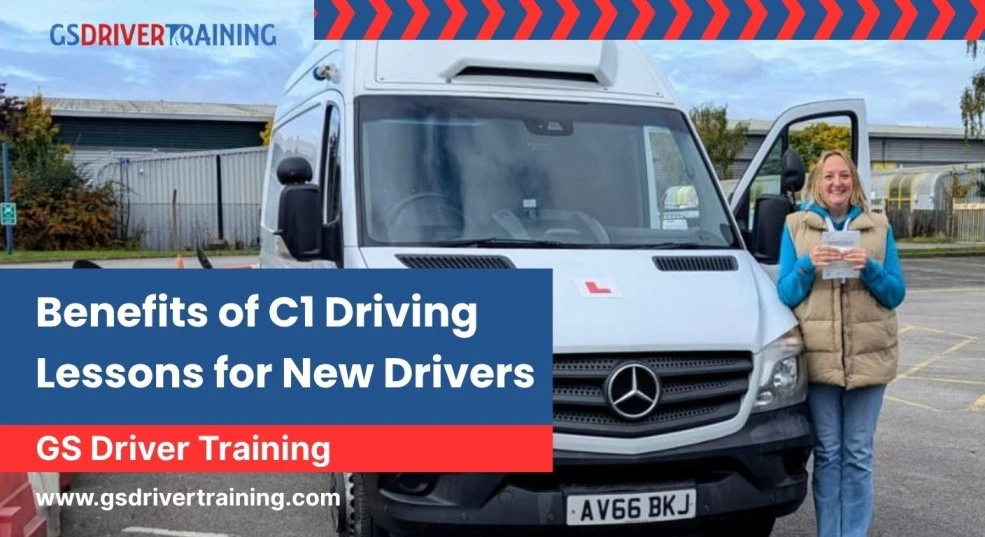
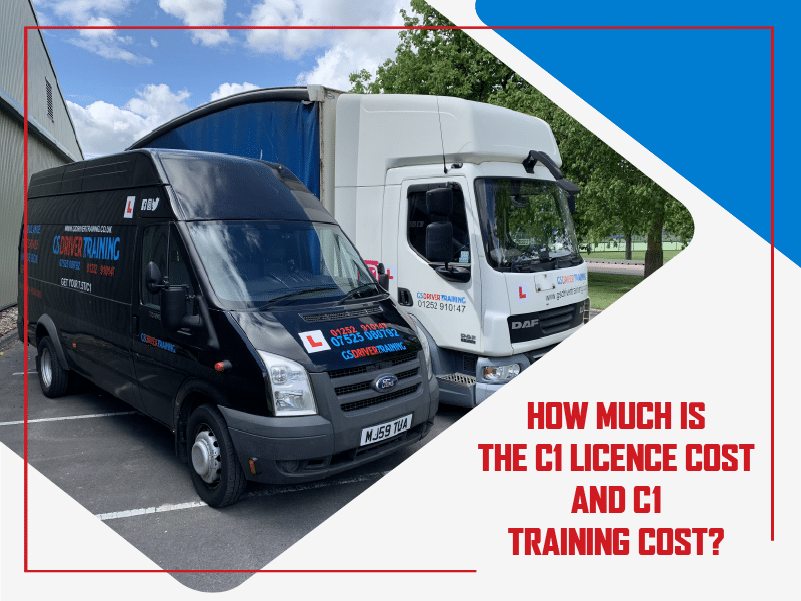
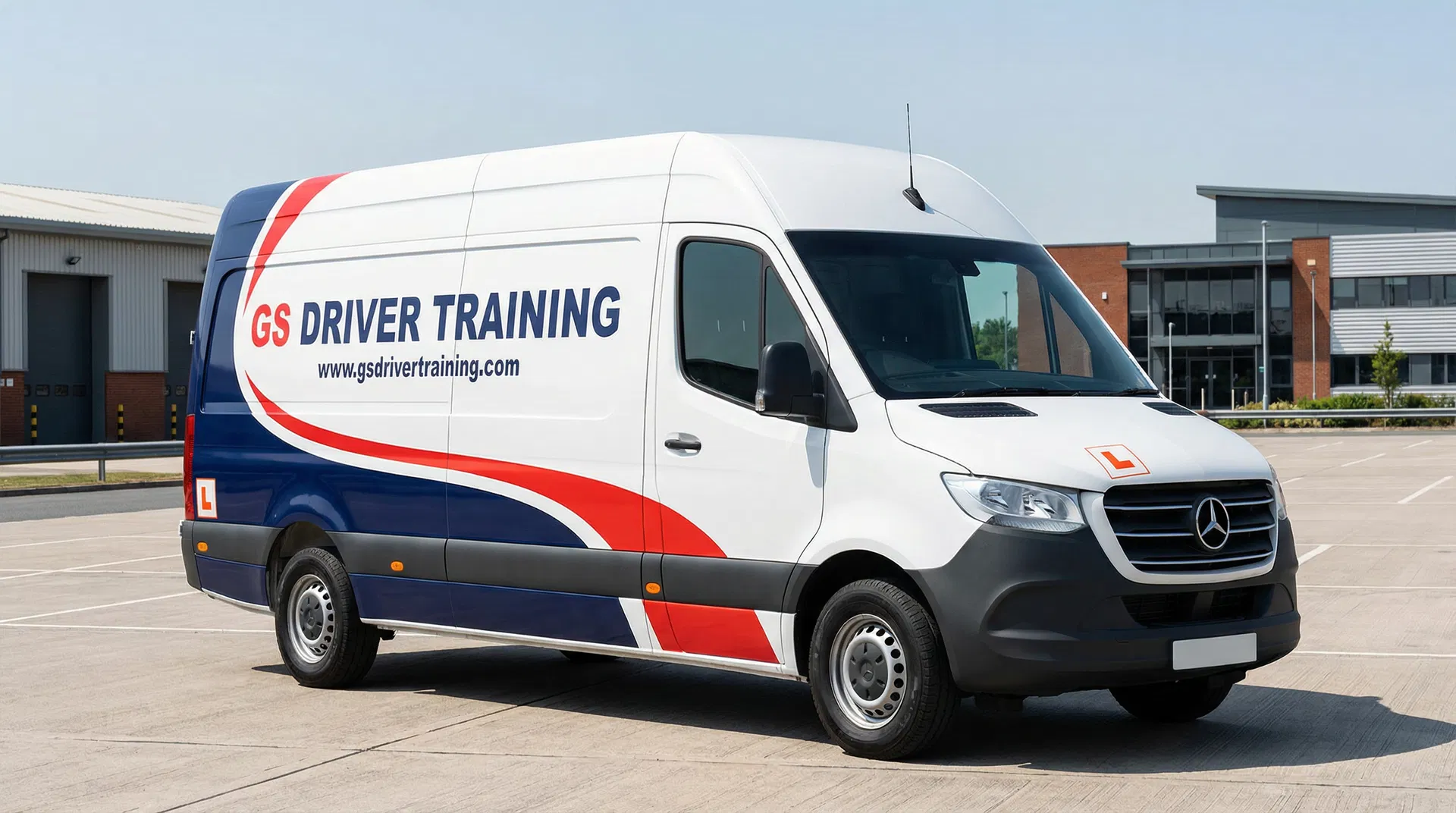
Practical training is delivered by a qualified C1 driving instructor using a vehicle in the C1 category (typically a Mercedes Sprinter or similar large van). Training duration depends on your experience:
| Previous Experience | Typical Training Duration |
|---|---|
| Car licence only, no large vehicle experience | 4–5 days |
| Some large van or motorhome experience | 2–3 days |
| Existing C1 entitlement, refresher training | 1–2 days |
Training covers vehicle familiarisation, mirrors and blind spots, road positioning, junction and roundabout technique, the reversing exercise, and show me / tell me vehicle safety questions.
Step 5: Pass the C1 Practical Driving Test
The C1 practical test lasts approximately 90 minutes and is conducted by a DVSA examiner. It includes a vehicle safety check, a reversing exercise, and a road drive. The test fee is £115 (weekday) or £141 (evening, weekend, or bank holiday). Upon passing, your licence will be updated with full C1 entitlement.
After Passing: What Comes Next?
Once you hold a full C1 licence, you are legally entitled to drive vehicles in the C1 category. For ambulance roles, your employer will typically provide additional training covering vehicle-specific procedures, patient handling, and — for emergency response roles — blue-light driving. The C1 licence is the foundation; employer-led training builds on top of it.
For more information on the difference between a C1 licence and emergency response driving, see: C1 Licence vs Emergency Response Ambulance Driving.
Book C1 Ambulance Training with GS Driver Training
GS Driver Training provides C1 ambulance driver training from our Dunsfold Aerodrome training centre, covering Surrey, Hampshire, Berkshire, and the South East. Call 01252 447808 or email [email protected].