

Why a Pre-Journey Safety Check Matters
A minibus carrying passengers — whether schoolchildren, elderly residents, sports club members, or charity service users — places a significant responsibility on the driver. A pre-journey safety check takes less than ten minutes and can prevent breakdowns, accidents, and serious injury. This checklist covers everything a minibus driver should check before every journey.
The Complete Minibus Pre-Journey Safety Checklist
1. Tyres
- Check tyre pressure against the manufacturer's recommended levels (found in the vehicle handbook or on the door sill sticker). Pressure requirements change when the vehicle is fully loaded.
- Inspect all tyres (including the spare) for cuts, bulges, embedded objects, and uneven wear.
- Check tread depth — the legal minimum is 1.6 mm across the central three-quarters of the tyre width, but 3 mm is recommended for safety.
- Check that wheel nuts are secure — look for rust streaks or paint cracks around the nuts, which can indicate movement.
2. Lights
- Check headlights (dipped and full beam), tail lights, brake lights, indicators, hazard lights, and reversing lights.
- Check that all light lenses are clean and undamaged.
- If driving in poor visibility, check fog lights are working.
3. Mirrors
- Adjust all mirrors before driving — do not adjust mirrors while moving.
- Check that all mirrors are clean and undamaged.
- Ensure you have full coverage of blind spots — a minibus has significantly larger blind spots than a car.
- If the vehicle has CCTV or reversing cameras, check these are working.
4. Fluid Levels
- Engine oil — check level with the dipstick when the engine is cold.
- Coolant — check the level in the expansion tank (never open the cap when the engine is hot).
- Brake fluid — check the level in the reservoir.
- Power steering fluid — check the level if the vehicle has hydraulic power steering.
- Windscreen washer fluid — ensure the reservoir is full.
5. Brakes
- Test the footbrake at low speed at the start of the journey — it should feel firm and the vehicle should pull up straight.
- Test the handbrake — it should hold the vehicle on a slope without excessive travel.
- Listen for any unusual noises when braking — grinding, squealing, or pulsing can indicate worn brake pads or discs.
6. Windscreen and Wipers
- Check the windscreen for cracks or chips that could impair visibility or fail an MOT.
- Check that windscreen wipers are working correctly and that the blades are in good condition.
- Clear any ice, snow, or condensation from all windows before driving — not just the windscreen.
7. Emergency Equipment
- Check that a first aid kit is present and in date.
- Check that a fire extinguisher is present and within its service date.
- Know the location of the emergency exit(s) and ensure they are not obstructed.
- Check that emergency exit handles and mechanisms are working correctly.
- Ensure a reflective warning triangle or breakdown kit is on board.
8. Passenger Safety Equipment
- Check that all seatbelts are present, undamaged, and functioning correctly.
- Check that wheelchair securing systems (if fitted) are in good working order.
- Ensure all seats are secure and not damaged.
- Check that any luggage or equipment is properly secured and cannot move during the journey.
9. Documentation
- Ensure the vehicle has a valid MOT certificate (if applicable — vehicles under 3 years old are exempt).
- Ensure the vehicle is insured for the intended use — check that your policy covers the number of passengers and the type of journey.
- If the vehicle is operated under a Section 19 permit, ensure the permit is valid and on board.
- Ensure the driver holds the correct licence category for the vehicle and journey type.
10. Route and Journey Planning
- Plan your route in advance and check for roadworks, closures, or diversions.
- Check the weather forecast — allow extra time and adjust your driving in adverse conditions.
- Ensure you know the destination address and have a backup navigation method if technology fails.
- Inform someone of your planned route and expected arrival time for longer journeys.
Printable Checklist Summary
| Check | Item | OK? |
|---|---|---|
| Tyres | Pressure, condition, tread, wheel nuts | ☐ |
| Lights | All lights working, lenses clean | ☐ |
| Mirrors | Adjusted, clean, undamaged | ☐ |
| Fluids | Oil, coolant, brake fluid, washer fluid | ☐ |
| Brakes | Footbrake, handbrake, no unusual noises | ☐ |
| Windscreen | No cracks, wipers working, clear of ice | ☐ |
| Emergency equipment | First aid kit, fire extinguisher, emergency exits | ☐ |
| Passenger safety | Seatbelts, wheelchair securing, luggage secured | ☐ |
| Documentation | MOT, insurance, permit, driver licence | ☐ |
| Journey planning | Route planned, weather checked, departure time | ☐ |
Training in Pre-Journey Checks
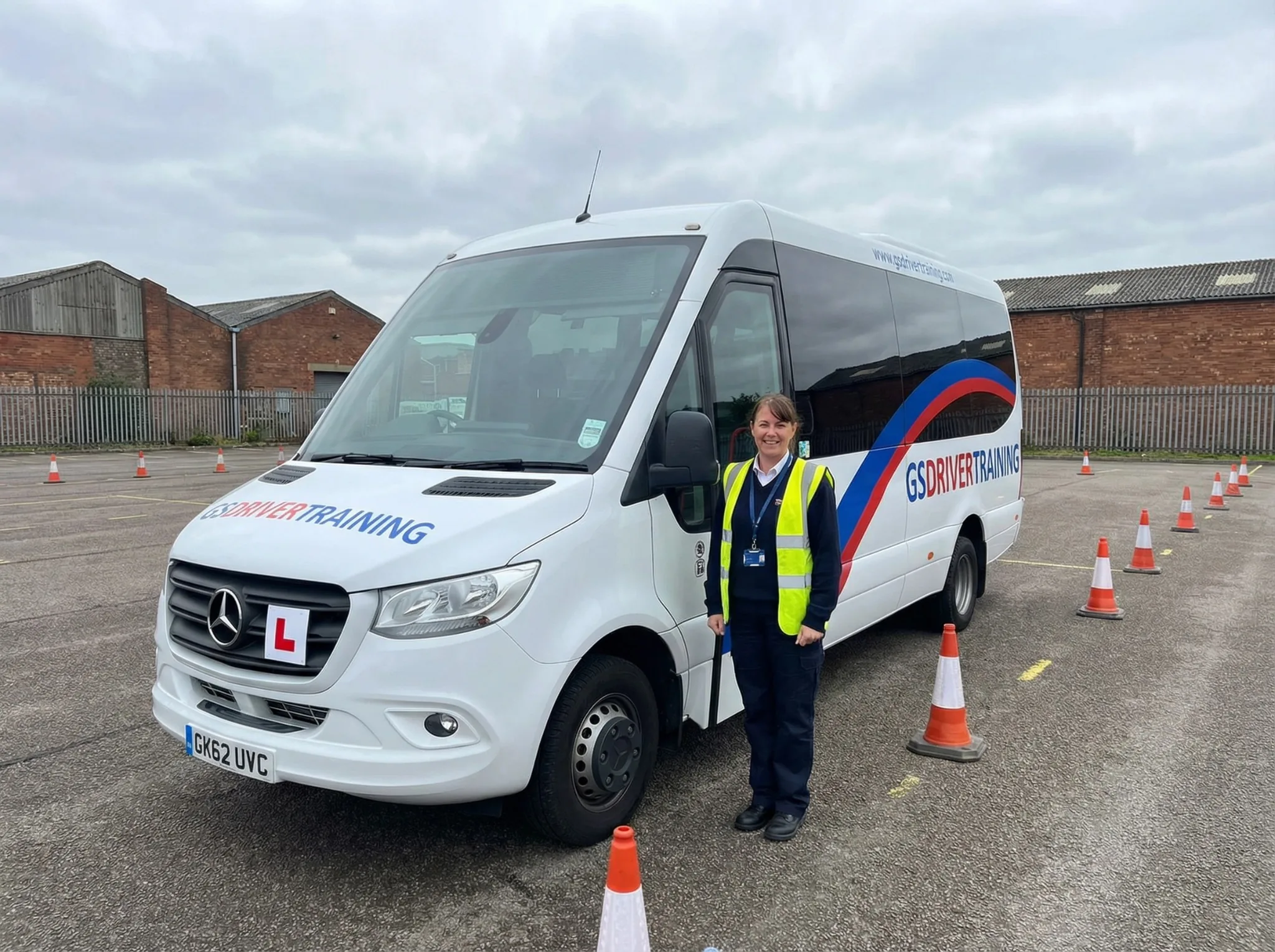
GS Driver Training includes pre-journey safety checks as a core part of all D1 minibus training. We also offer standalone minibus driver assessments for organisations that want to ensure their staff are competent in vehicle checks and safe driving. Call us on 01252 447808 to discuss your requirements.
