
Overview
The C1 practical driving test is conducted by a DVSA examiner and lasts approximately 90 minutes. It consists of three main elements: a vehicle safety check at the start, a reversing exercise, and a road drive of around 60 minutes. This guide explains exactly what happens on the day so you know what to expect and can prepare effectively.
Before the Test
Arrive at the test centre at least 10 minutes before your appointment. Bring your photocard driving licence (both parts if you have an older-style licence). The test vehicle must be in the correct category, roadworthy, and insured for the test. If you are using a training school's vehicle, they will arrange this. If you are using your own vehicle, ensure it meets the DVSA's requirements.
Vehicle Safety Check (Show Me / Tell Me)
The test begins with vehicle safety questions. The examiner will ask you two questions:
- Tell me: A question about vehicle safety that you answer verbally (e.g. "Tell me how you would check the oil level")
- Show me: A question that requires a practical demonstration (e.g. "Show me how you would check the tyre pressure")
Each incorrect answer counts as one minor fault. Two incorrect answers count as two minor faults. Learn the answers to all show me / tell me questions for the specific vehicle you will be tested in.
Reversing Exercise
The reversing exercise requires you to reverse the vehicle into a marked bay or around a corner under examiner observation. The examiner will assess your control of the vehicle, your observation, and your accuracy. Move slowly, use all mirrors systematically, and stop immediately if you are unsure of your position. The reversing exercise is the most common source of serious faults in the C1 test.
Road Drive
The road drive lasts approximately 60 minutes and covers a variety of road types including residential streets, town centre roads, A-roads, and dual carriageways. The examiner will give you directions in advance. You will be assessed on:
- Mirror use — before every manoeuvre, signal, and change of speed or direction
- Road positioning and lane discipline
- Speed — appropriate for the conditions and road type
- Junction and roundabout technique
- Clearance from parked vehicles and cyclists
- Steering technique
- Anticipation and hazard awareness
Fault Marking
The examiner marks faults on a DL25 form. There are three types of fault:
| Fault Type | Description | Effect on Result |
|---|---|---|
| Driver (minor) fault | A less serious driving error | Up to 15 allowed; 16 or more = fail |
| Serious fault | A potentially dangerous error | 1 = automatic fail |
| Dangerous fault | An error that creates actual danger | 1 = automatic fail |
After the Test
The examiner will tell you immediately whether you have passed or failed. If you pass, they will give you a pass certificate and your licence will be updated by the DVLA. If you fail, they will give you a DL25 form showing the faults recorded. Use this to identify areas for improvement before retaking the test.
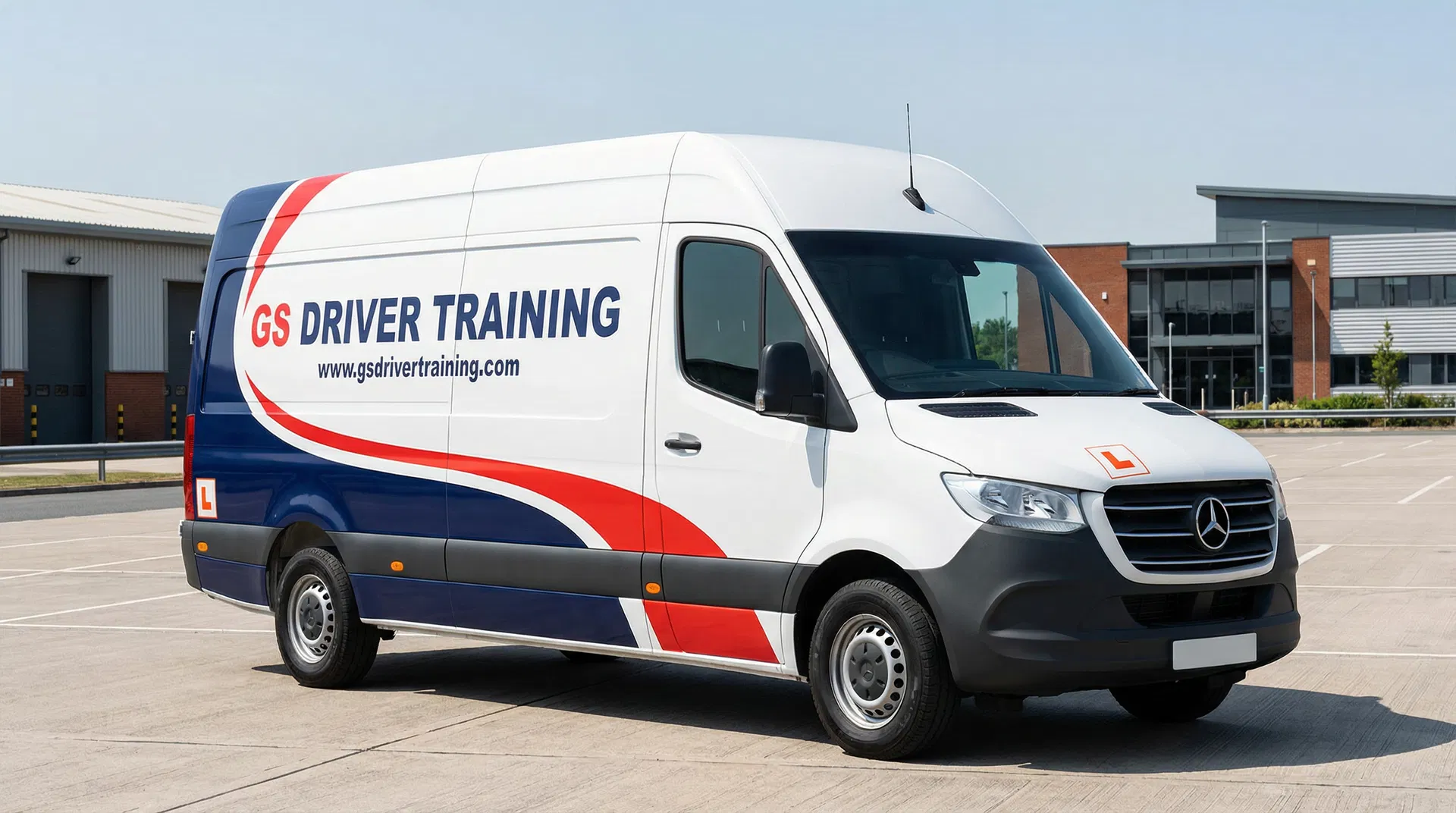
Book C1 Training at GS Driver Training
GS Driver Training prepares candidates for the C1 practical test from our Dunsfold Aerodrome training centre, covering Surrey, Hampshire, Berkshire, and the South East. Call 01252 447808 or email [email protected].