
D1 vs PCV: The Short Answer
D1 is a specific licence category within the broader PCV (Passenger Carrying Vehicle) family. All D1 licences are PCV licences, but not all PCV licences are D1. The key difference is the size of vehicle each category covers. This guide explains the full PCV licence hierarchy and helps you identify which category you need.
The PCV Licence Categories
| Category | Vehicle Type | Passenger Seats | Common Use |
|---|---|---|---|
| D1 | Minibus | 9–16 (excl. driver) | School transport, care homes, charities, sports clubs |
| D1+E | Minibus with trailer | 9–16 + trailer | Minibus towing a trailer |
| D | Full bus / coach | 17+ (excl. driver) | Bus routes, coach hire, tour operators |
| D+E | Bus / coach with trailer | 17+ + trailer | Coach with luggage trailer |
What Is a D1 Licence?
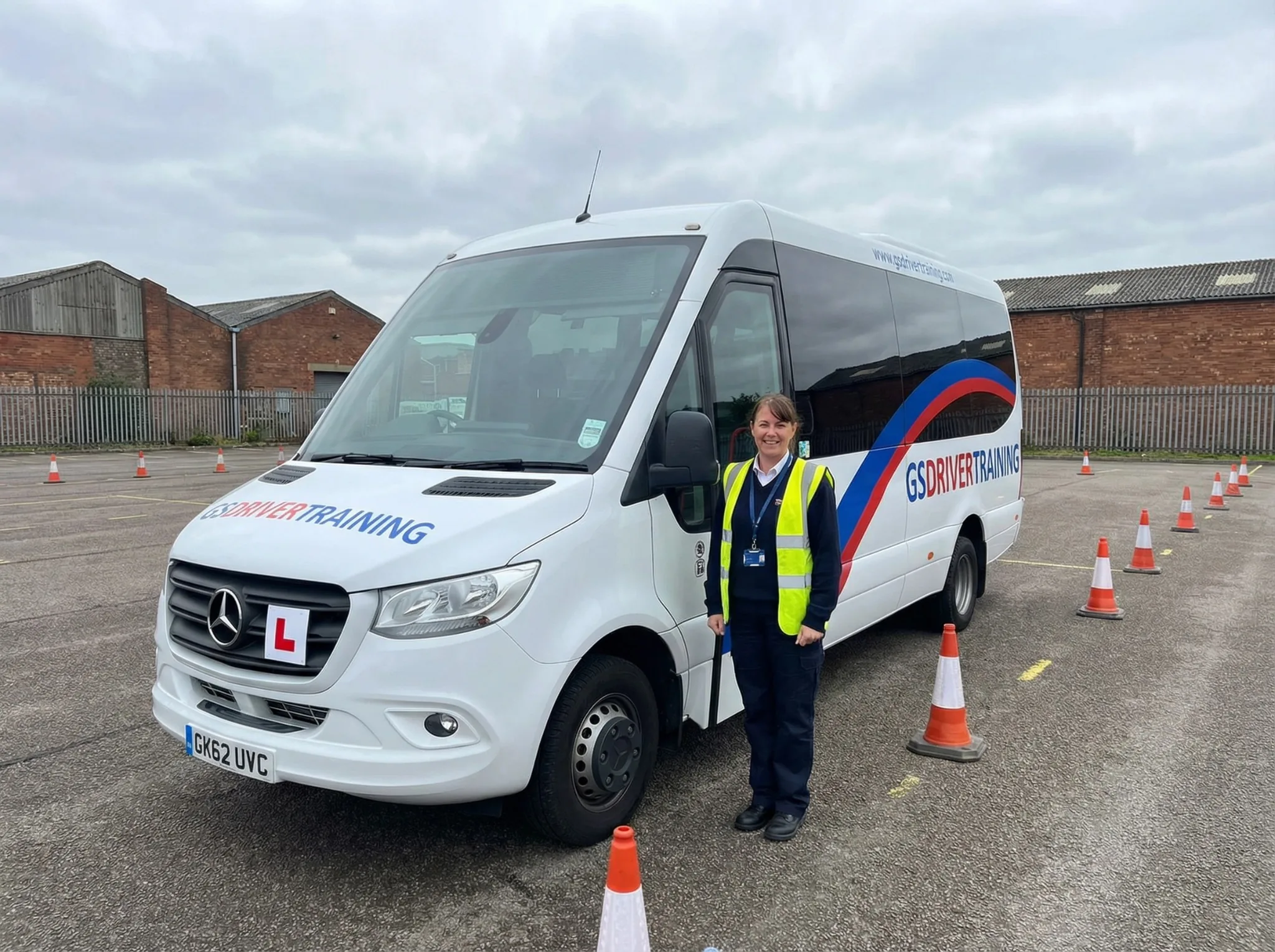
A Category D1 licence authorises you to drive a minibus — a vehicle with between 9 and 16 passenger seats (excluding the driver). It is the entry-level PCV licence and is the most commonly sought passenger-carrying qualification for people working in schools, care homes, charities, and community transport. See our full guide: D1 Minibus Licence Explained.
What Is a Category D (Full PCV) Licence?
A Category D licence authorises you to drive a full-size bus or coach — any vehicle with 17 or more passenger seats (excluding the driver). This is the licence required for bus drivers, coach drivers, and anyone operating large passenger vehicles. The Category D licence requires the same stages as D1 (medical, theory, practical) but the training is more extensive and the test vehicle is a full-size bus or coach.
Which Licence Do I Need?
The answer depends on the vehicle you will be driving:
- 9–16 passenger seats: You need a D1 licence.
- 17 or more passenger seats: You need a Category D licence.
- 8 or fewer passenger seats: A standard car (Category B) licence is sufficient.
If you are unsure about the passenger seat count of the vehicle you will be driving, check the vehicle's registration document (V5C) or the manufacturer's specification. The seat count excludes the driver's seat.
Can a D1 Licence Holder Drive a Full-Size Bus?
No. A D1 licence only authorises you to drive vehicles with 9–16 passenger seats. To drive a vehicle with 17 or more passenger seats, you need a full Category D licence. However, holding a D1 licence can reduce the training required to obtain a Category D licence, as many of the skills are transferable.
Does D1 Include Driver CPC?
Driver CPC is a separate qualification that is required for commercial driving in both D1 and D categories. If you hold a D1 licence and want to drive commercially (for hire or reward), you must also hold a valid Driver CPC. The CPC qualification consists of four modules and must be renewed every five years through 35 hours of periodic training. See: Driver CPC Explained.
Automatic vs Manual Transmission
Both D1 and D licences can be restricted to automatic transmission vehicles only, depending on the vehicle used for the test. If you take your D1 test in an automatic minibus, your licence will be restricted to automatic vehicles. To drive a manual minibus, you must take your test in a manual vehicle. Most modern minibuses are automatic, so this is less of a practical concern than it once was.
D1 Training in Surrey
GS Driver Training provides Category D1 minibus training across Surrey and the South East. If you need a full Category D (bus/coach) licence, we can advise on the best training pathway. Call us on 01252 447808 to discuss your requirements.
Frequently Asked Questions
Does a Category D licence automatically include D1?
Yes. If you hold a full Category D licence, you are also entitled to drive D1 vehicles (minibuses with 9–16 seats).
Can I get a D1 licence before a Category D licence?
Yes. Many drivers start with D1 and later upgrade to Category D if they want to drive full-size buses or coaches.
What is the difference between PCV and PSV?
PCV (Passenger Carrying Vehicle) refers to the driver's licence category. PSV (Public Service Vehicle) refers to the operator's licence required to run a commercial passenger transport service. A driver needs a PCV licence; an operator needs a PSV licence.
