


The HGV Hazard Perception Test: A Complete Guide
The hazard perception test is the second section of the HGV theory test. It is the section that most candidates underestimate — and the section most likely to cause a failure. This guide explains exactly how the test works, how the scoring system operates, and how to maximise your score.
How the Test Works
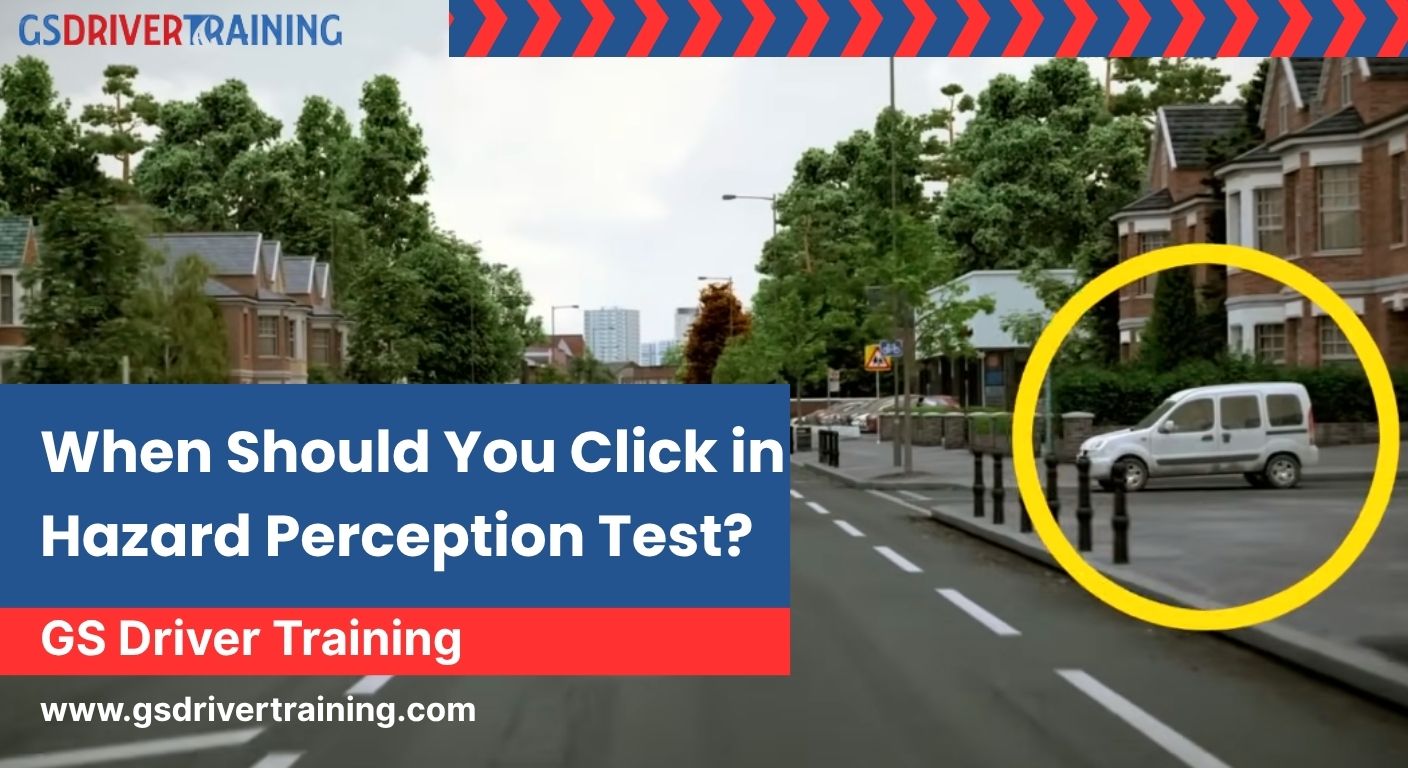
You will watch 19 video clips filmed from a driver's perspective on real UK roads. Each clip contains at least one developing hazard — a situation that requires the driver to take action, such as a vehicle pulling out, a pedestrian stepping into the road, or a junction requiring braking. One of the 19 clips contains two developing hazards.
You respond by clicking the mouse (or tapping the screen) when you spot a developing hazard. The system records the timing of your click relative to when the hazard begins to develop. The earlier you click after the hazard starts to develop, the higher your score.
The Scoring System Explained
| When You Click | Score |
|---|---|
| Very early in the hazard development window | 5 points |
| Early in the hazard development window | 4 points |
| Middle of the hazard development window | 3 points |
| Late in the hazard development window | 2 points |
| Very late in the hazard development window | 1 point |
| After the hazard window closes, or no click | 0 points |
| Random clicking pattern detected | 0 points for that clip |
The maximum score per hazard is 5 points. With 20 developing hazards across 19 clips, the maximum possible score is 100 points. The pass mark is 67 out of 100.
What Is a "Developing Hazard"?
A developing hazard is not just any potential danger — it is a specific situation that is actively developing and will require you to take action. The key distinction is between a potential hazard (something that might become dangerous) and a developing hazard (something that is already becoming dangerous and requires a response).
Examples of developing hazards include:
- A parked car with a door opening as you approach
- A cyclist wobbling and moving into your path
- A vehicle at a junction pulling out in front of you
- A pedestrian stepping off the pavement without looking
- A vehicle ahead braking sharply
- A child running towards the road
Stationary hazards (a parked car, a road sign, a speed bump) are not developing hazards and will not score points.
When Exactly Should You Click?
You should click as soon as you see a hazard beginning to develop — not when it has fully developed. The common mistake is waiting until the hazard is obvious before clicking. By that point, you are already in the lower-scoring part of the window.
Think of it this way: you are not clicking to say "there is a hazard here." You are clicking to say "I have spotted this situation developing and I am already preparing to respond." A professional driver would begin to ease off the accelerator or check mirrors the moment they spot a developing situation — not when it has become an emergency.
Practical rule of thumb: Click when you first think "I need to watch that." Do not wait for confirmation.
The Random Clicking Trap
The system detects random or excessive clicking. If you click more than a certain number of times in a short period, the system will flag it as a pattern and award zero for that clip. Do not click repeatedly hoping to catch the scoring window — this will cost you points.
Click deliberately and purposefully. One or two clicks per hazard is normal. Three or four might be acceptable if you are genuinely responding to a developing situation. Rapid repeated clicking will be penalised.
Differences Between the Car and HGV Hazard Perception Tests
| Feature | Car Test | HGV Test |
|---|---|---|
| Number of clips | 14 | 19 |
| Clips with two hazards | 1 | 1 |
| Total developing hazards | 15 | 20 |
| Maximum score | 75 | 100 |
| Pass mark | 44/75 | 67/100 |
| Clip perspective | Car driver | HGV driver (higher viewpoint) |
The HGV clips are filmed from a higher viewpoint, reflecting the perspective of a lorry driver. This means you will see hazards developing differently — particularly at junctions and on narrow roads where the height advantage gives you more forward visibility but also creates different blind spots.
How to Practise Effectively
- Use the official DVSA practice clips. The DVSA's Theory Test Kit and official app include genuine hazard perception practice clips. These are the closest thing to the real test.
- Watch dashcam footage. Searching for "HGV dashcam UK" on YouTube gives you hours of real driving footage to practise spotting developing hazards.
- Practise every day for two weeks. Hazard perception is a skill that improves with repetition. Daily short sessions are more effective than occasional long ones.
- Identify hazards out loud when driving. If you are a passenger in a car, practise narrating developing hazards as you see them. This trains your eye to spot them early.
- Do not practise on unofficial apps. Some third-party apps use different scoring algorithms that do not reflect the real test. Stick to DVSA-approved resources.
Frequently Asked Questions
Can I pause the clips during the test?
No. The clips play continuously and cannot be paused or rewound. You must respond in real time.
What happens if I miss a developing hazard entirely?
You score zero for that hazard. As long as you score enough points on the other hazards to reach 67 overall, you will still pass.
Is the hazard perception test the same for all HGV categories?
Yes. The same hazard perception test applies to all large goods vehicle categories (C, C1, C+E). You do not need to retake it when upgrading your licence.