
How Brexit Changed HGV Driving in Europe
The United Kingdom's departure from the European Union on 31 January 2020, followed by the end of the transition period on 31 December 2020, fundamentally changed the rules for UK-based HGV drivers operating in Europe. The free movement of goods and drivers that existed under EU membership was replaced by a new framework governed by the UK-EU Trade and Cooperation Agreement (TCA), bilateral road transport agreements, and a range of new administrative requirements. For UK hauliers and drivers, understanding these changes is not optional. Non-compliance can result in vehicles being detained at borders, significant fines, and the loss of operating licences.
This guide covers the key changes for UK HGV drivers operating in Europe in 2026, including cabotage restrictions, permit requirements, driver documentation, tachograph rules, and the practical steps drivers and operators need to take before crossing the Channel.
The UK-EU Trade and Cooperation Agreement and Road Haulage
The TCA, which came into force on 1 January 2021, provides the legal framework for UK-EU road haulage. Under the TCA, UK hauliers are permitted to make unlimited point-to-point journeys between the UK and EU member states (bilateral transport). However, the agreement significantly restricts the ability of UK hauliers to carry out cabotage operations (transporting goods between two points within a single EU country) and cross-trade operations (transporting goods between two EU countries without returning to the UK).
Cabotage Restrictions Post-Brexit
Under EU membership, UK hauliers could carry out unlimited cabotage operations within EU member states. Post-Brexit, UK hauliers are permitted to carry out a maximum of two cabotage operations within a single EU member state within a seven-day period following an international journey into that country. After the two cabotage operations are completed, the vehicle must leave the EU member state before any further cabotage is permitted in that country.
These restrictions apply to all EU member states. Some individual EU countries have introduced even stricter rules, so operators should check the specific requirements of each country they intend to operate in.
Cross-Trade Operations
UK hauliers are permitted to carry out one cross-trade operation (a journey between two EU member states) in addition to their bilateral journeys, but only as part of a journey that begins or ends in the UK. This is significantly more restrictive than the unlimited cross-trade operations that were available under EU membership.
ECMT Permits for UK Hauliers
For journeys that go beyond the bilateral transport rights provided by the TCA, or for operations in countries that are not covered by the TCA, UK hauliers may need to obtain an ECMT (European Conference of Ministers of Transport) permit. ECMT permits are issued by the Department for Transport and are available in annual and short-term (30-day) formats.
The number of ECMT permits available is limited, and demand typically exceeds supply for the most popular permit types. Operators should apply for ECMT permits well in advance of planned operations. The application process is managed through the GOV.UK ECMT permits page.
Driver Documentation Requirements
UK HGV drivers operating in Europe must carry a comprehensive set of documents. Missing documentation can result in delays at borders and fines from enforcement authorities in EU member states.
| Document | Requirement | Notes |
|---|---|---|
| Valid UK driving licence | Mandatory | Must include the relevant HGV category (C or C+E) |
| Driver Qualification Card (DQC) | Mandatory for commercial driving | UK DQCs not automatically recognised in all EU states |
| Passport | Mandatory | Must be valid for the duration of the journey |
| Vehicle registration document (V5C) | Mandatory | Or letter of authority from the registered keeper |
| Operator licence copy | Mandatory | Certified copy must be carried in the vehicle |
| CMR consignment note | Mandatory for international freight | Required under the CMR Convention |
| Tachograph records | Mandatory | Current day plus previous 28 days |
| ECMT permit (if applicable) | Required for certain operations | Check whether your specific journey requires one |
| Green Card (motor insurance) | Recommended; required by some EU states | Confirms valid insurance for EU travel |
Driver CPC and DQC Recognition Post-Brexit
One of the most significant changes for UK drivers operating in Europe is the loss of automatic mutual recognition of Driver Qualification Cards (DQCs). Under EU membership, a UK-issued DQC was automatically recognised in all EU member states. Post-Brexit, this automatic recognition no longer applies.
The UK and EU have agreed that UK DQCs will continue to be recognised in EU member states for the time being, but this arrangement is subject to ongoing review. Some EU member states have introduced additional requirements for UK drivers, and the situation may change. UK drivers operating in Europe should check the latest guidance from the Department for Transport and the relevant national authorities in each country they intend to operate in.
Tachograph Rules for Cross-Border Operations
UK HGV drivers operating in Europe must comply with EU tachograph regulations (Regulation (EU) No 165/2014) as well as UK domestic tachograph rules. From 2026, all new tachographs fitted to vehicles operating internationally must be Smart Tachograph Version 2 (Smart 2) units, which include GNSS (GPS) positioning and improved data security features.
Drivers must carry their tachograph records for the current day and the previous 28 days. EU enforcement authorities have the right to inspect tachograph records at the roadside, and infringements can result in significant fines and vehicle detention.
For a comprehensive overview of tachograph rules, see our HGV Tachograph Rules UK guide.
Customs and Border Procedures
Post-Brexit, all goods moving between the UK and the EU are subject to customs procedures. Key requirements include customs declarations, safety and security declarations (Entry Summary Declarations for goods entering the EU), and sanitary and phytosanitary (SPS) checks for certain goods including food, plants, and animal products.
Delays at the border due to missing or incorrect documentation are one of the most common problems faced by UK hauliers operating in Europe. Operators should invest in customs management software and ensure that all drivers are briefed on the documentation requirements for each load they carry.
Driving Hours and Rest Rules in Europe
UK HGV drivers operating in Europe must comply with EU drivers hours rules (Regulation (EC) No 561/2006) rather than the UK domestic rules that apply to purely domestic operations.
| Rule | EU Requirement |
|---|---|
| Daily driving limit | 9 hours (extendable to 10 hours twice per week) |
| Weekly driving limit | 56 hours |
| Fortnightly driving limit | 90 hours |
| Daily rest | Minimum 11 hours (reducible to 9 hours up to 3 times per week) |
| Weekly rest | Minimum 45 hours (reducible to 24 hours with compensation within 3 weeks) |
| Break requirement | 45-minute break after 4.5 hours driving (may be split 15 + 30 minutes) |
For a detailed guide to drivers hours rules, see our HGV Driver Fatigue Management article.
Practical Tips for UK Drivers Operating in Europe
Based on the experience of UK hauliers who have adapted to the post-Brexit operating environment, the following practical steps are recommended for drivers and operators planning cross-Channel operations.
First, ensure that all documentation is prepared well in advance of the journey. A pre-departure checklist should cover the driver licence, DQC, passport, vehicle documents, operator licence copy, CMR note, and any required permits. Second, use a reputable customs broker or freight forwarder to manage the customs declaration process. Third, ensure that the vehicle tachograph is calibrated and up to date, and that the driver card is valid. EU enforcement authorities are particularly vigilant about tachograph compliance. Fourth, familiarise yourself with the specific rules of each EU country you intend to operate in, as some countries have additional requirements beyond the TCA framework.
Looking Ahead: Future Changes to UK-EU Road Haulage
The UK-EU relationship in road haulage continues to evolve. The UK Government has been in ongoing discussions with the EU about improving the terms for UK hauliers, particularly around cabotage and cross-trade operations. Operators should monitor updates from the Department for Transport, the Road Haulage Association (RHA), and the Freight Transport Association (FTA) for the latest developments.
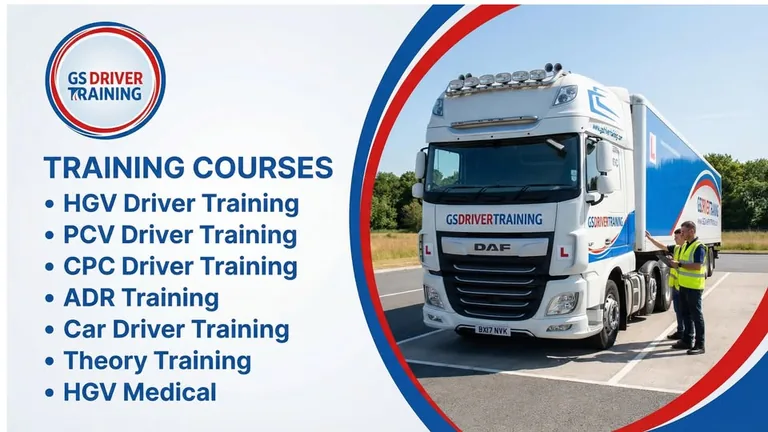
For drivers looking to build the skills and knowledge needed for international operations, GS Driver Training's Class 1 HGV training and Driver CPC periodic training programmes provide comprehensive preparation for both domestic and international driving careers. Contact us on 01252 447808 to discuss your training needs.